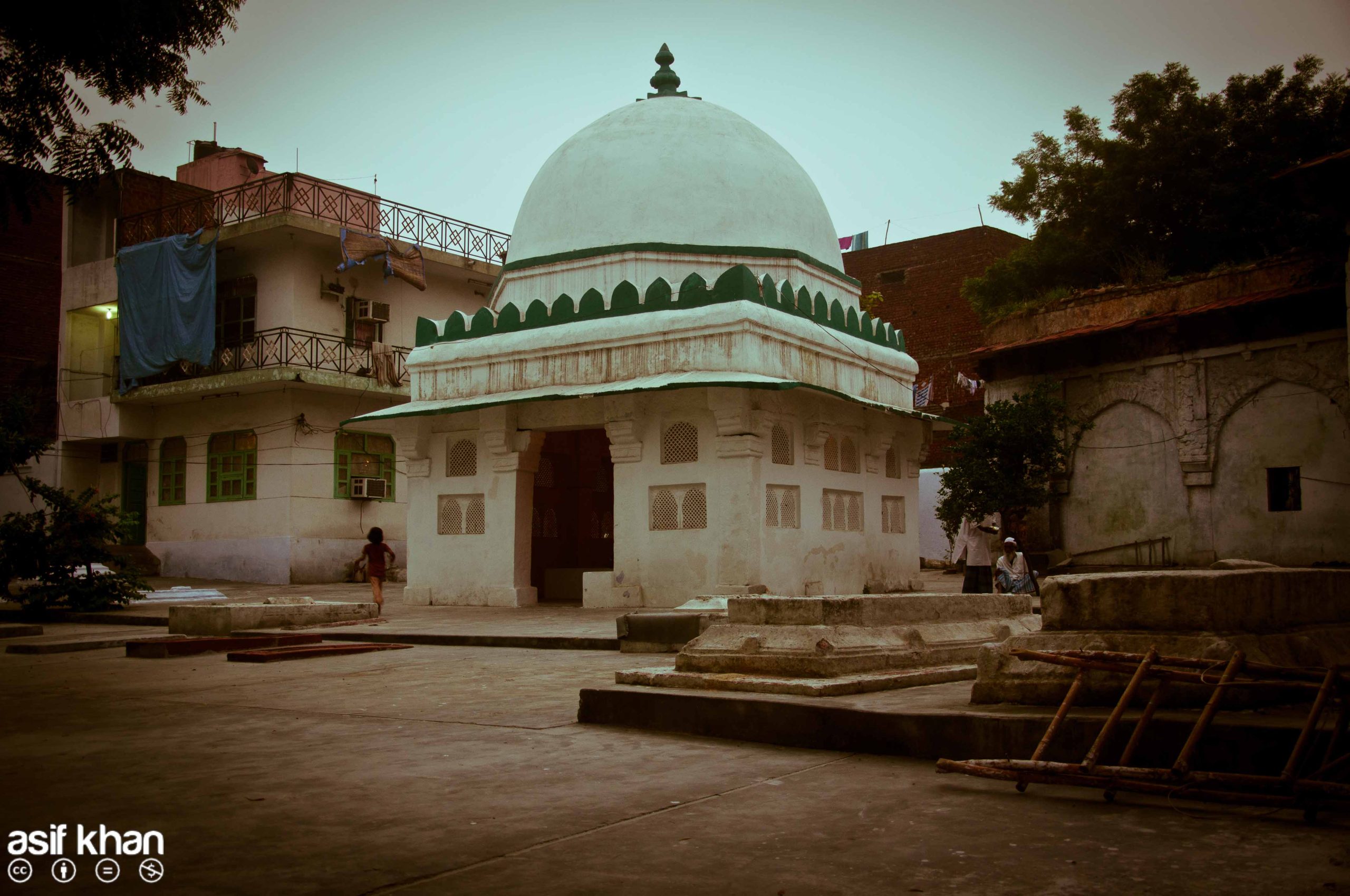
Anybody moving around South Delhi would at some point cross that flyover plus major junction known as Chirag Dilli, situated on one of the arterial roads which cut across Delhi. The name always gave out that the place had some historical significance – I could never find the time to know more about it. Till now.
Chirag Dilli happens to be named after Nasiruddin Mahmud Chiragh Dehlavi or Roushan Chiragh-e-Dilli, one of the foremost disciples of Hazrat Nizamuddin, whose tomb is located in that area. Even though I had a broad idea where the tomb might be situated, it wasn’t exactly as easy to find out. Specially if you are stuck in evening traffic with the clock ticking closer to the hour for Iftar while the exact direction of your destination is still unknown. Surprisingly even auto rickshaw drivers weren’t very familiar when I asked them, and they kept pointing me towards many of the obscure tombs you would see around the roads of South Delhi. Nonetheless, I just followed my instinct around and after asking some local folks finally managed to reach the lane where people happily pointed me in the direction of the tomb. Though yes of course, I left my car at the first parking spot I found available, because I didn’t want to risk getting caught up in those narrow lanes again and miss Iftar.
I was told to look for a gate which would lead towards the tomb. Missed it twice. Just walked past it. Anybody who looks at what the gate actually meant, and what it looks like now would know why it happened to me.

Busy market, narrow lanes. A slight drizzle a while ago didn’t make it an entirely pleasant experience either as I kept jumping and skipping around the small puddles to move ahead. The markets were busy selling everything – timber, electrical goods, clothes, vegetables, fruits, DVDs – and since the time was around sunset, everyone was either returning home or stepping out. The locality looked like having a sizable community of migrants from North East India, and no, I wasn’t staring at some of the pretty faces one usually spots amongst them. I was fasting, remember, and like a good boy I kept my eyes covered with a mental veil of modesty, and kept a low gaze. But you can’t blame me if I still happened to notice that some of the girls had really well pedicured feet. Understandably, because there would be a fair percentage among them who would be the ones prettifying the GK girls right across the boundary wall at the upmarket salons and spas situated there.
I wonder what shoe gazing might have done to my fast. People who think that just keeping the eyes lowered is something that protects your righteousness have obviously not heard of a shoe or foot fetish.

The lanes finally converged to a dome shaped structure. So yes, I was there, as it stood in its whitewashed glory of chalk and lime. Not an exactly pleasing sight considering its 14th century heritage, but not exactly surprising either. After all, don’t we all know already about the dismal state of structures which have the slightest semblance to a word known as heritage? The tomb compound was an open courtyard, with the tomb of Chiragh-e-Dilli in the center, and numerous graves were lined around it. The grave of Bahlul Lodhi, founder of the Lodhi dynasty happened to be one of them.


Most of us would have those cousins who might have chipped their milk teeth while chasing someone at the mosque. Unmindful of whether it’s a place of worship or not, the most natural thing for them to do at any open space is to run around after each other – squealing with laughter, chasing each other, tripping over and falling. The kids here were no different. Only till the time their dad’s voice didn’t go hoarse yelling for them to get back home for Iftar. Time for Iftar, and the man sitting next to me just broke out into an impromptu conversation about having spent a year working in Saudi, and the good fortune of having made multiple trips to both of the Masjids. Now those who know would know that shrines and tombs tend to also be the hotbed for proliferating sects and differences of opinion. My Iftar companion did rue this fact, and put things very simple – sab Barelvi, Deobandi, Jamaati bante hain aur ladte rehte hain, koi accha Musalmaan and Insaan banne ke liye nahi sochta (everyone fights for various sects, nobody thinks about becoming a good Muslim and Human Being).


While I broke my fast, I was just trying to think how everything around the tomb of that venerated man was just crumbling. Not just the physical structure to say the least – the government and people would pitch in exactly at the right moment to restore it acceptably. The ideologies and thoughts he might have built in his lifetime – which government or people would come about to stop them from crumbling, or had they already reached a stage of being irreparable?